Startup development is not a simple process, and it does not begin with a product—it begins with understanding a problem. Most startup ideas fail not because they are technically poor, but because they solve a problem that is not urgent, expensive, or frequent enough. Below, we go through the most important stages of startup development, focusing on factors that increase the chances of success in the early stage.
1. Startup development begins with problem validation, not the idea
Almost everyone has had a startup idea at least once. Much more rarely does someone have a clearly defined problem worth solving.
Startup development begins the moment you can precisely describe who has the problem, how often it occurs, and how it is currently being solved. If users already have a solution that is “good enough,” your product must be noticeably better, faster, or cheaper to have a chance.
At this stage, the goal is not to impress people with a product vision but to understand their reality. Conversations with potential users often reveal that the problem is not what we initially thought. This insight can save months of development and significant capital.
Without problem validation, startup development becomes a set of assumptions.
2. Validating a startup idea in the early stage
Once the problem is defined, the next step is validating the startup idea. This means determining whether the market is truly willing to accept and pay for the solution.
Early-stage startups often make the mistake of testing reactions to a concept rather than real user behavior. People will say they like an idea. What matters far more is whether they will leave their email, reserve the product, or spend money.
Validation involves testing interest before developing a complex product. This could be a simple version of the service, limited functionality, or a simulation of the final solution. The key is to obtain real data.
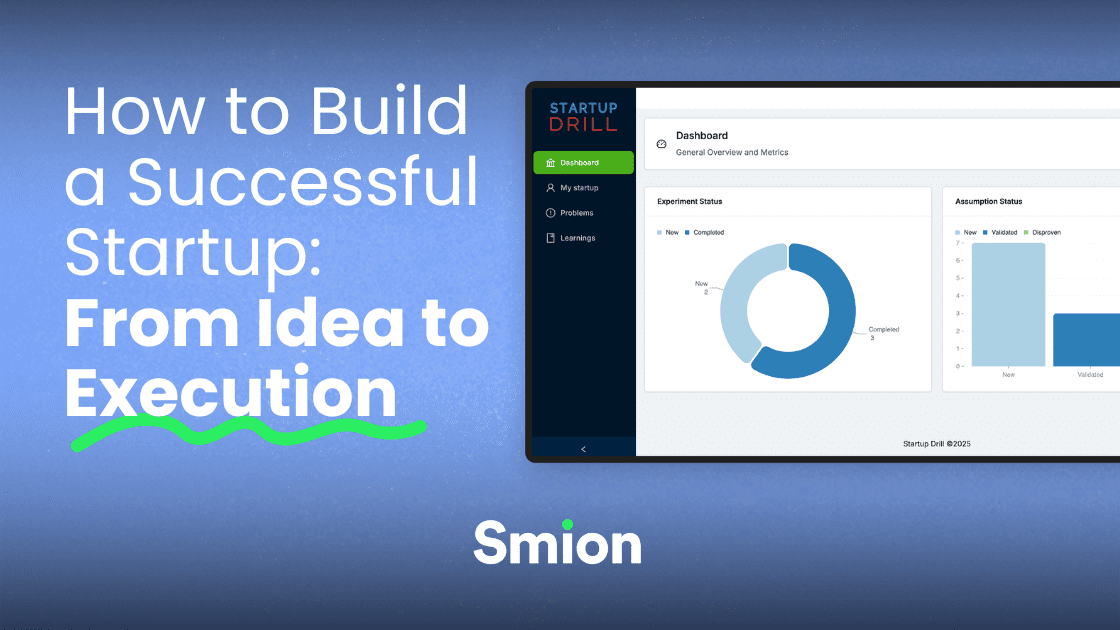
If you want a structured framework to go through this phase and clear tasks to complete before product development, learn more about the Startup Drill platform—a practical program that guides founders through the most important steps of validation and early startup development.
The goal of this stage is not to confirm that you are right but to identify where the model does not work while changes are still inexpensive.

3. Startup development stages: from MVP to product–market fit
Only after validation does it make sense to invest in product development. At this stage, founders build an MVP (Minimum Viable Product) that allows them to test the most critical assumptions.
Startup development stages in this phase focus on iteration. The product is launched in a limited form, user reactions are tracked, and functionality is adjusted. Metrics such as user retention and willingness to pay are far more important than the number of downloads or website visits.
Product–market fit is the moment when the market clearly shows that the solution has value. Users return, recommend the product, and are willing to pay for it. Without this signal, aggressive investment in marketing and growth only increases costs.
4. Business model and team as the foundation of sustainable growth
Startup development does not end with a good product. Sustainability depends on the business model.
Developing a sustainable business model is crucial for long-term startup success. By using the Business Model Canvas, you can visualize and structure the most important aspects of your business. This tool helps startups define and test their strategy before investing significant resources in product development. Along with the business model, creating a business plan is also essential.
If monetization is not clearly defined, a startup may have users but not a business. That is why testing the business model is just as important as developing the product.
Another crucial element is the team. In the early stage of a startup, it is essential to have complementary skills—understanding the product and understanding the market. Unclear responsibilities and unresolved ownership structures often pose a bigger risk than competitors.
Alignment between founders, the problem, and the market significantly influences long-term startup development.
5. Funding, pivoting, and scaling through the startup lifecycle
Funding should follow the stage the startup is in. In the early stage, this often includes personal funds, grants, or incubation programs. If you are considering this option, read how to start a startup with the help of a startup incubator and what you can realistically expect from such a program.
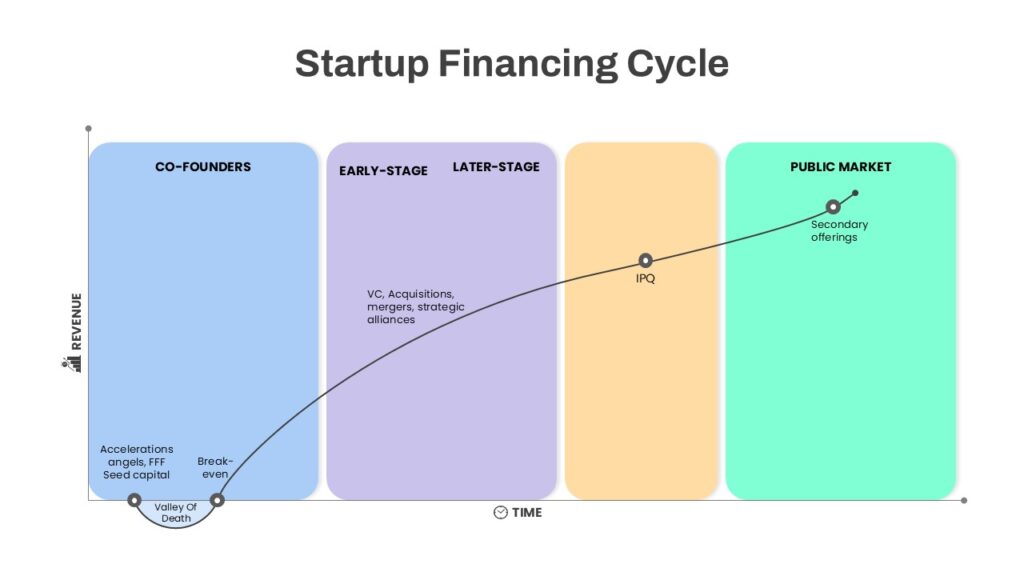
Pivoting is a natural part of the startup lifecycle. When data shows that a certain segment is not working, adapting the model is not a sign of weakness but a rational decision. The key is that the change is based on metrics.
Scaling only comes when the model can be replicated and is economically sustainable. If you are still learning who your ideal customer is and how to retain them, it is too early to accelerate growth.
Want to quickly check the meaning of all the terms used in this guide? Take a look at our Startup Dictionary—a perfect complement to this startup development guide.
Conclusion
Startup development is a process in which risk is reduced through clearly defined stages. Startup ideas alone have no value. Value emerges only when the market confirms that the problem exists, that the solution is relevant, and that the business model is sustainable.
If each stage is completed thoroughly, the chances of success increase significantly. If they are skipped, the market will reveal it very quickly.