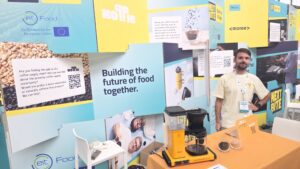

This autumn, our FoodUnfolded team brought food literacy straight to where young people gather – the student restaurant at the Faculty of Food Technology and Biotechnology (PBF) and The University of Zagreb Student Centre in Zagreb. The pop-up events took place right in front of the Student Restaurant, where hundreds of students pass daily for lunch, making it the perfect spot to spark curiosity and conversation around food. All together during the 4 pop up events we engaged 1966 students.
Young People Teaching Young People
What made this Food Literacy Pop-Up special was its peer-to-peer approach. With the help of student volunteers from the faculty, we created a relaxed and relatable atmosphere – young people speaking to their peers about the food system, sustainability, and everyday habits that make a difference. Conversations flowed naturally over lunch trays and puzzle pieces, blurring the line between learning and leisure.
The Puzzle as a Learning Tool
At the heart of the event was our interactive FoodUnfolded puzzle, featuring visuals that highlighted key themes of food producing, food waste, sustainable and healthy choices. Positioned at the busy canteen entrance, the puzzle immediately drew attention and inspired friendly competition. Students eagerly joined in – solving, competing, and discussing along the way. The activity turned out to be fun and an engaging way to build awareness about food literacy and spark curiosity about where our food comes from and how we use it.
Insights and Impact
Conversations at the pop-up often touched on how young people themselves are a key group when it comes to food waste. According to the latest 2025 Dukat study, while food waste is common across all age groups in Croatia, young adults aged 18–29 discard the most food – with over 70% reporting they throw away food at least once a week. The main reasons include preparing or buying too much food, irregular meal planning, and misunderstanding “best before” dates.
These findings highlight why strengthening food literacy among university students and young consumers (18+) is so important. At this stage of life, many are taking their first steps toward independent living – starting to cook for themselves, plan meals, and make daily food choices without family influence. Building food literacy skills such as meal planning, creative cooking, and mindful shopping can help them reduce waste, save money, and develop healthier eating habits – all while supporting broader sustainability goals.
A Campus as a Learning Space
By turning the space in front of the student restaurant into a hub for discovery, the FoodUnfolded pop-up showed that learning about food systems doesn’t need to happen in a classroom. When approached through play, dialogue, and peer exchange, food literacy becomes part of everyday campus life – relevant, fun, and empowering.