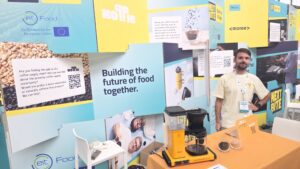

As part of the civic education project “Is Food (Not) a Problem?”, and at the invitation of Croatian language teacher Željka Orban, we visited Marko Marulić Secondary School in Slatina on April 29, 2025, where we held a FoodEducators lecture and workshop for students of class 3.a of the general secondary school program. The workshop was attended by 22 students from class 3.a.
Through creative and interactive methods, we introduced students to the topic of food waste and food loss, while also opening space for discussions about innovation, entrepreneurship, and sustainability. Our goal was to encourage young people to think critically, create solutions, and take initiative—because real change starts with them.
Why Is It Important to Talk About Food Waste?
Every year, more than 1 billion tons of food are wasted globally. In the EU, the average is 131 kg per person per year, while in Croatia it amounts to 280,000 tons, of which 75% comes from households.
This is precisely why it is important to address these topics in schools, among young people, where values are shaped that will define future society. Food is an excellent link between science, everyday life, environmental awareness, and civic responsibility.
From Problem to Idea: What Did the Students Create?
Students worked in teams and, through a structured creative process, developed their own solutions to the problem of food waste and loss. All teams demonstrated motivation, innovation, and strong collaboration. Here is what they developed:
1. A Meal and Grocery Planning App
An application that tracks users’ eating habits, offers smart shopping suggestions, helps with meal planning, and manages budgets using artificial intelligence. The goal: to prevent food waste already at the planning stage.
2. A Memory Game for Children
An educational game that encourages children to try new foods, develop healthier eating habits, and learn about the importance of food preservation through play and rewards.
3. An App to Reduce Impulse Buying
A solution for people who shop “by eye” and under the influence of advertising. The app helps users plan purchases based on real needs, reduce excess buying, and shop responsibly.
4. A Digital Add-On for Retail Apps
An add-on that integrates into retail chain apps and offers recipes, expiration date reminders, and tips for sustainable shopping—all in one place, within apps people already use.
5. The “One Day Like in the Past” Campaign
Inspired by the past, this campaign invites citizens to eat simply, locally, and sustainably at least once a week, just as previous generations did. The campaign would promote responsibility, tradition, and awareness about food.

Schools as Spaces for Change
The workshop was more than a learning experience—it was a platform for ideas, dialogue, and action. Students demonstrated a strong understanding of the problem and a willingness to create solutions themselves. They learned how problems can turn into opportunities, how innovation can be a force for good, and how an entrepreneurial mindset can generate social value.